 Urgala
Collagen
Connective Tissue Support & Nutritional Science
Understanding collagen's structure, its role in the body, and the science of dietary collagen peptides.
What is Collagen?
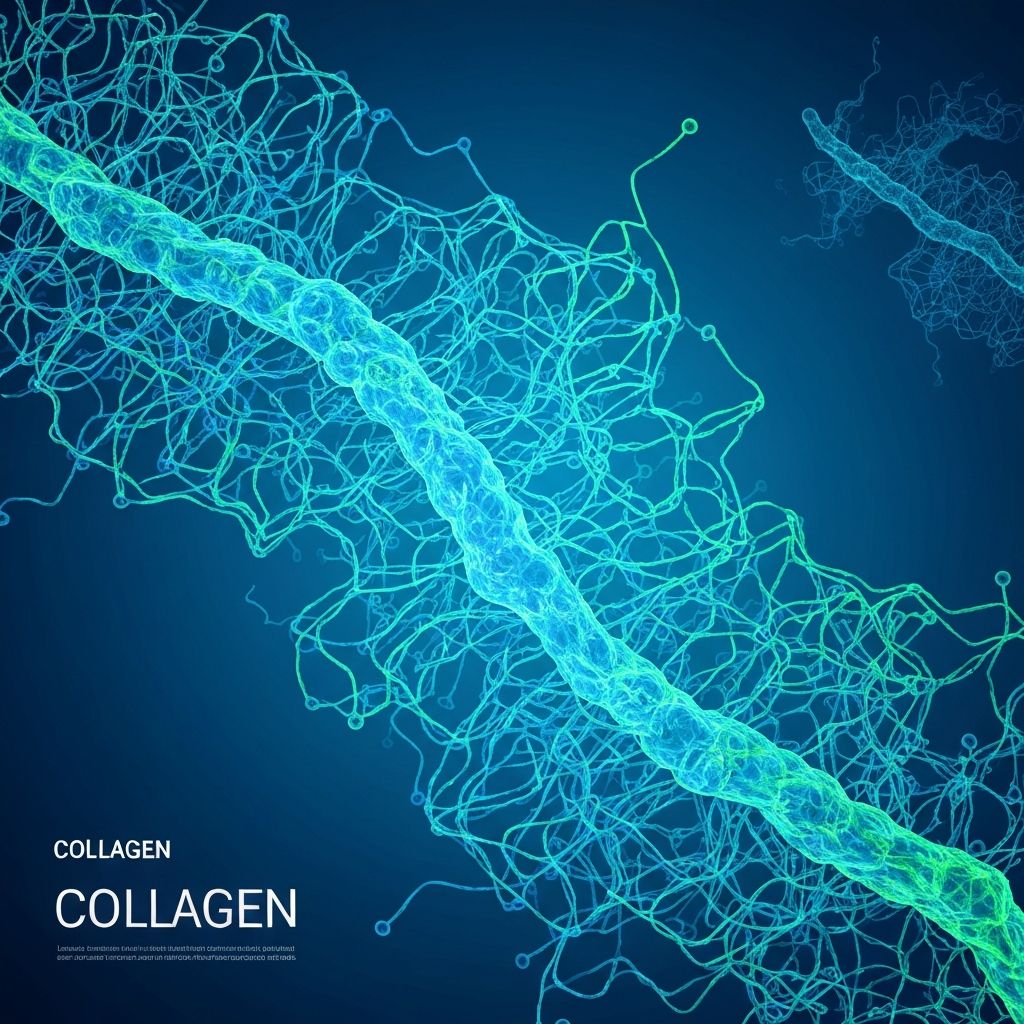
Collagen is the most abundant protein in the human body, comprising approximately 30% of all protein. It is the primary structural component of connective tissues including skin, tendons, ligaments, cartilage, and bones.
There are at least 28 different types of collagen, with Types I, II, and III being the most abundant. Each type serves specific structural roles and is found in different tissues throughout the body.
The Structure of Collagen
Molecular Architecture
Collagen molecules form triple helix structures made of amino acid chains, primarily glycine, proline, and hydroxyproline. This unique structure provides its characteristic strength and flexibility.
Structural Hierarchy
Individual collagen molecules organize into fibrils, which bundle into fibers, creating the architectural framework of connective tissues. This hierarchical organization provides structural integrity and elasticity.
Cross-Linking
Collagen molecules are stabilized through cross-linking, which strengthens tissue structure over time. This process is influenced by various factors including age and oxidative stress.
Collagen in Joint Health
Cartilage Composition
Type II collagen is the dominant protein in cartilage, comprising 50-70% of its dry weight. It provides the structural framework that allows cartilage to maintain its shape and function.
Lubrication & Elasticity
Collagen networks in cartilage create a matrix that retains water and nutrients, enabling smooth joint movement. This matrix is essential for distributing load and reducing friction.
Tissue Maintenance
The body continuously remodels collagen in response to mechanical demands. Adequate amino acid availability supports this ongoing renewal process.
Dietary Collagen Peptides
Collagen peptides (also called hydrolyzed collagen or collagen hydrolysate) are produced by breaking down native collagen into smaller amino acid chains through a process called hydrolysis. This creates a form that is more easily absorbed by the body.
Scientific research investigates whether dietary collagen peptides can support the body's collagen synthesis and tissue renewal processes. Studies examine bioavailability, tissue incorporation, and functional outcomes.
Collagen Synthesis & Contributing Factors
The body synthesizes collagen using amino acids, primarily glycine, proline, and hydroxyproline. Several nutrients support this process:
- Vitamin C - Essential for collagen stabilization and cross-linking
- Copper - Required for enzyme activity in collagen formation
- Amino acids - The building blocks of collagen molecules
- Zinc - Important for enzyme cofactors in collagen synthesis
- Iron - Necessary for hydroxylation reactions in collagen formation
Continue Reading
Educational Information
This article explains the science of collagen from an educational perspective. It does not constitute medical advice or claims regarding collagen supplementation. Individual factors affecting collagen health vary widely. Consult a healthcare provider before beginning any new dietary regimen.
Not a medicinal product. Consult a doctor before use.